
What Business to Start in Nepal with a Small Capital (below 5 Lakhs, 2026)
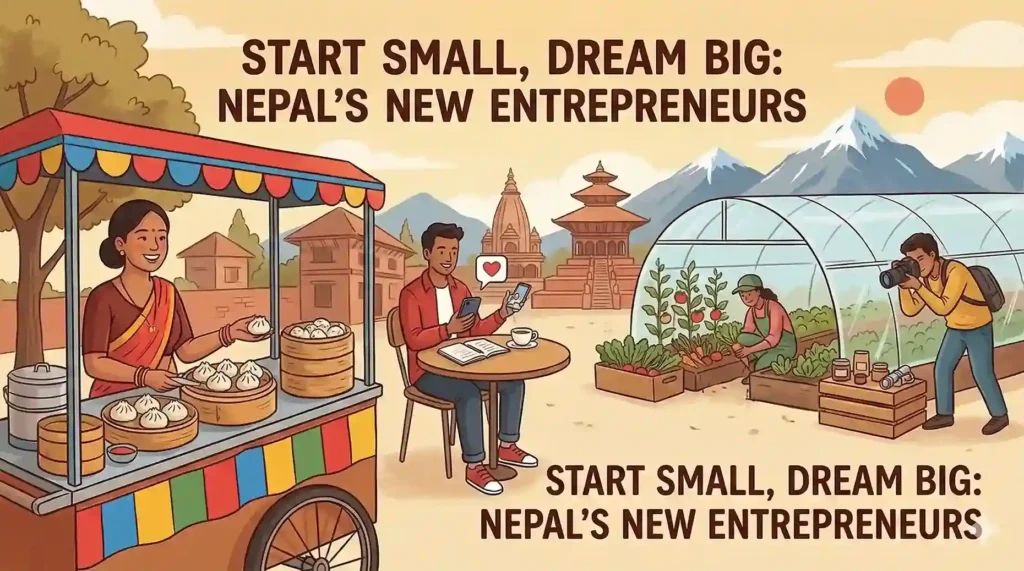
You see it every day—someone with a food cart serving the morning rush, a young person managing Instagram shops from a small room, neighbors ordering fresh eggs from the local poultry farm. These aren’t overnight successes; they’re stories of regular people who took a calculated risk and built something meaningful.
Starting a business in Nepal isn’t as impossible as it seems, and 2026 presents an exceptional opportunity for aspiring entrepreneurs. Yes, there are challenges: the bureaucratic paperwork, inconsistent power supply, and skepticism from friends and family who doubt your venture’s viability. But here’s the encouraging truth: right now, there’s never been a better time to launch small business ideas in Nepal. Consumer spending is steadily climbing, internet penetration is expanding across urban and rural areas, and people are actively searching for innovative products and services that extend far beyond what traditional big shops and markets offer. The most exciting part? Many of these opportunities require minimal investment. Whether you’re exploring business ideas in Nepal with low investment or seeking small business ideas in Nepal for 2026, you’ll find numerous viable options.
With business ideas below 5 lakh capital, you can establish a profitable enterprise without needing substantial financial resources or collateral. From digital services and e-commerce ventures to niche retail and local product manufacturing, the landscape has shifted dramatically. The combination of increasing consumer demand, digital accessibility, and a growing middle class creates the perfect environment for entrepreneurs willing to think creatively and start lean. Today’s economic climate means you don’t need massive capital to build something meaningful—you just need the right idea and determination.
What Actually Works Right Now
The most successful new businesses aren’t the ones following trends—they’re solving real problems. Before diving in, spend a week observing your neighborhood. What do people actually want? What frustrates them about their current options? What’s missing? That observation is worth more than any business school lecture.
Food & Beverage Businesses
The Food Cart That Actually Makes Money
Kathmandu’s streets have hundreds of food carts, but the ones thriving aren’t just selling cheap food—they’re selling convenience and quality. Think less “random momos” and more “the best panipuri in the neighborhood” or “gourmet momo fillings your mom never tried.”
You could start with a cart selling fusion street food—momo tacos, loaded aalu parathas with creative sauces, or Vietnamese-style sandwiches using local ingredients. The barrier to entry is low (probably 50,000-150,000 NPR to start), but success depends on consistency and location. Scout your spot for two weeks before investing.
Baking from Your Kitchen
If you can make a decent cake, there’s money here. But skip the “birthday cake” market—everyone does that. Instead, focus on what’s actually hard to find: sourdough bread, gluten-free pastries, traditional Nepali sweets made with modern techniques, or dietary-specific baked goods (keto, vegan, etc.). Build a small Instagram following, start with WhatsApp orders, and let word of mouth do the heavy lifting.
Specialty Mushroom Farming
This one gets overlooked but it’s genuinely profitable. Hotels and restaurants in Kathmandu Valley are always hunting for fresh mushrooms. Start with oyster mushrooms in your backyard or a small rented space. Initial investment: maybe 25,000-50,000 NPR. Harvest cycle: 3-4 weeks. You can have repeat customers (local restaurants) within two months.
Prepared Meal Services
More people are working long hours and skip lunch or grab junk food. A meal prep service targeting office workers—healthy, affordable, delivered by noon—could be gold. You don’t need a fancy kitchen; start from home, follow food safety basics, and deliver to 20-30 offices. Charge 250-400 NPR per meal.
Retail & Commerce
The Niche Shop
Generic shops are dying. The ones winning are hyper-specific. Open a store for just organic products, or just eco-friendly household items, or just pet supplies. Make yourself the expert people trust. A niche shop with deep knowledge beats a general store every time.
Marketplace Reselling
Buy from wholesale markets and sell on TikTok Shop, Facebook Marketplace, or Temu. This isn’t new, but it works. Whether it’s clothing, accessories, home decor, or gadgets—find something with good margins and build an audience. Some people are making 1,00,000+ NPR monthly doing this part-time.
Upcycled Fashion & Vintage
Nepal’s youth are hungry for this. Buy old clothes from second-hand markets or directly from expats leaving the country, upcycle or resell them at vintage shops. Instagram loves this content, and your margins can be 200-300%.
Dropshipping (but Do It Right)
Yes, dropshipping has a bad reputation. But it works if you’re not lazy about it. Choose a narrow product category, write honest reviews, engage with your community, and actually use the products you sell. It takes months to make real money, but startup costs are almost zero.
Digital & Online Services
Content Creator for Small Businesses
Most small shops in Nepal desperately need content but can’t afford big agencies. You could make 10,000-20,000 NPR per month managing social media for 3-5 small businesses. Just show up consistently, post good photos, respond to comments, and track results. You need a phone, a camera (or just your phone), and decent writing skills.
Freelance Writing & Translation
If you write well in English and Nepali, there’s steady demand. Charge 300-500 NPR per 500 words for blog posts, website copy, or translated content. Build a profile on Upwork or Fiverr, but also directly pitch to local digital agencies and businesses.
Photography for Local Creators
Every small business owner with an Instagram page needs product photos. Offer package deals: 50 photos for 20,000 NPR or product photography sessions for 5,000 NPR/hour. This doesn’t require expensive equipment—modern phone cameras are genuinely great.
Online Tutoring & Courses
English coaching, exam prep (CAT, TOEFL, IELTS), or even niche skills (graphic design basics, social media marketing) can be taught online. Charge 300-1,000 NPR per session. Platforms like Preply help, but building a direct student base on WhatsApp is more profitable long-term.
Virtual Assistant Services
Agencies and entrepreneurs in other countries often need admin help: scheduling, email management, data entry. Charge $5-15 per hour (which is excellent income in Nepal). Start by offering services to one or two clients and expand from there.
Tourism & Hospitality
Homestay Business
This works, but be picky about it. Renovate one room properly, get a few good reviews, and you’ll have consistent bookings. Charge $30-50 per night. The work? Keeping the room clean and occasionally chatting with guests. Many people make 30,000-50,000 NPR monthly from just one room.
Niche Tour Experiences
Skip general city tours. Instead, create specific experiences: “local food walks,” “street art and murals tour,” “photography tour for Instagram,” “meditation retreats,” “women-only trekking groups.” Build an audience on Instagram, charge $40-100 per person, and offer tours twice a month. High margins, and you’re actually enjoying your work.
Travel Planning Service
People hate planning trips. Offer personalized Nepal trip planning for international visitors. You’d charge a flat fee (5,000-10,000 NPR) or a percentage of the tour cost. Your knowledge of hidden gems, local contacts, and insider tips makes you valuable.
Manufacturing & Crafts
Handmade Jewelry
If you can make it, there’s a market. Focus on one style: minimalist silver pieces, colorful beaded jewelry, or traditional designs with modern twists. Sell through Instagram, Etsy, or local markets. Mark-up can be 300-500%.
Custom Candles & Soaps
High demand, especially in tourist areas and among eco-conscious consumers. Invest 50,000 NPR in supplies, make 100-200 units, and you’re profitable. Scents sell—invest in good fragrance oils, not cheap perfume.
3D Printing Customization
If you’re tech-inclined, invest in a 3D printer (150,000-300,000 NPR). Print custom figurines, phone stands, desk organizers, or personalized gifts. Sell on Instagram and Etsy. Margins are excellent once you break even.
Printables Business
Create downloadable planners, templates, wall art, or worksheets. Sell them on Etsy or Gumroad. Zero production cost after creation. If even 100 people buy your product at $3, that’s passive income.
Agriculture & Farming
Free-Range Egg Production
Organize 20-30 chickens in your yard (or a small rented plot). Sell eggs at 8-10 NPR per piece to neighbors and local restaurants. Costs almost nothing after setup, and you get consistent revenue.
Value-Added Farming
Don’t just grow vegetables—process them. Make pickles, jams, dried herbs, or vegetable chips. Processing adds 200-300% to your margins. One farmer I know makes more from dried chili flakes than from selling fresh chilis.
Beekeeping
Low investment (around 50,000 NPR), high reward. Sell honey and beeswax products. Urban areas especially are hungry for raw, local honey. You’ll also get pollution reduction benefits for your neighborhood—win-win.
Poultry Farming (The Smart Way)
Forget trying to compete with factory farms. Go for specialty birds: quail eggs (higher price), exotic chicken breeds, or ducks. Quail eggs alone fetch double the price of chicken eggs and require less space.
Making It Actually Work
Pick Something You Don’t Mind Doing on Bad Days
I’ve seen amazing business ideas fail because the owner got bored. You’ll do this work when you’re sick, when customers complain, when sales are slow. Pick something that genuinely interests you.
Do Real Market Research
Don’t guess. Spend money talking to potential customers. If you’re thinking of a food business, interview 50 people about what they’d buy. If you’re considering a service, actually approach 10 businesses and ask if they need it. Reality is cheaper than expensive mistakes later.
Start Embarrassingly Small
Your first version should feel too small. If you’re uncomfortable with how tiny you’re starting, you’re probably at the right size. This keeps risk low while you learn.
Find Your First 10 Customers Before You Scale
The ones who say “yes” to your rough version, who believe in your idea, who give you honest feedback—keep them close. They’ll help you improve and refer others.
Manage Money Like It’s Not Yours
Separate business and personal finances. Track every expense. Reinvest 50% of profit back into the business for the first year. Most business failures aren’t from bad ideas—they’re from sloppy money management.
The Legal Stuff (It’s Not as Scary)
Register your business at the local office. Get a PAN number. Keep records. This takes a weekend and maybe 5,000-10,000 NPR. Skip this and you’ll face problems later.
Real Talk
This isn’t about getting rich quick. It’s about building something that gives you income, independence, and dignity. Some of these ideas will make 20,000 NPR monthly. Others could hit 1,00,000+ NPR. It depends on your execution, market fit, and effort.
The people succeeding right now aren’t the ones with the cleverest ideas. They’re the ones who picked something, started small, paid attention to what worked, and kept showing up.
Your Next Step
Read through these small business ideas in Nepal for 2026 and ask yourself: What could I actually do this week? Not someday. This week. Which of these business ideas in Nepal with low investment would you tell people about without feeling embarrassed? Which one would still genuinely interest you in six months when the initial excitement fades? Consider not just your passion but also the practical reality—does this align with business ideas below 5 lakh capital that you can realistically launch and sustain? Start there. The rest will follow. Remember, thousands of successful entrepreneurs in Nepal started with nothing but a clear vision and determination. Your next breakthrough business might be waiting in these pages, requiring only your commitment and a modest investment to transform from idea into reality.
